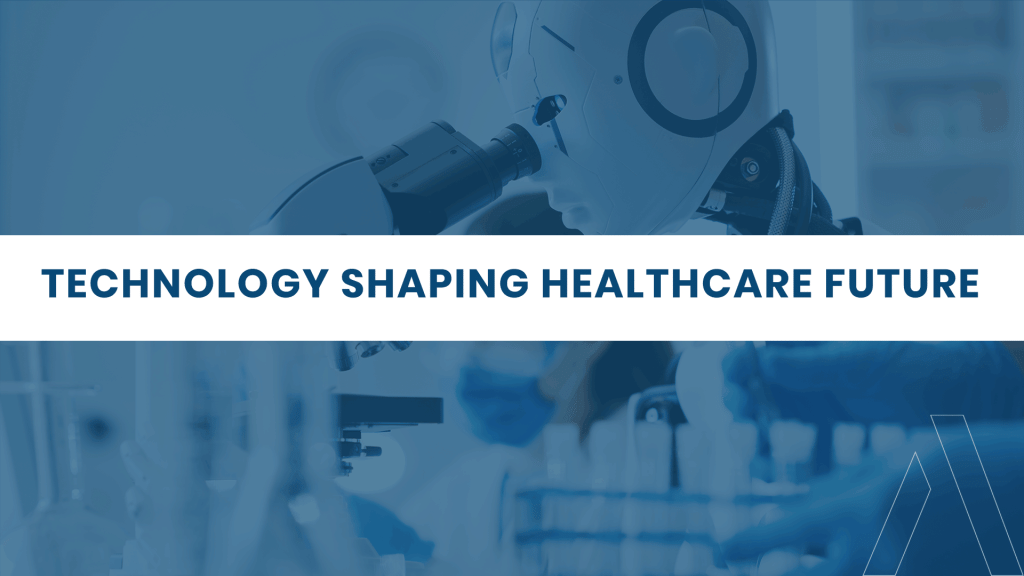
Technology has been a strong driving element in changing the healthcare landscape. From diagnostics to digital patient records, innovation in health is consequently rewriting how healthcare services are delivered, managed, and experienced.
The HIS has been able to enhance operational efficiency by managing patient information, appointment scheduling, and clinical workflow automation. These will enable healthcare professionals to arrive at decisions quickly by basing them on data and, at the same time, enhancing coordination among different departments.
Artificial intelligence is also redefining medical diagnostics. AI-powered tools assist physicians in the analysis of medical images, predicting risks of diseases, and arriving at clinical decisions with heightened precision. Moreover, telemedicine has facilitated access to healthcare services, whereby patients can consult specialists remotely without hindrance, thus receiving timely care anywhere in the world.
Organizations can enhance patient safety, improve the quality of services, and utilize the available resources optimally by integrating technology into the health infrastructure. Digital transformation is not a competitive advantage; it is an essential requirement of the modern health systems.
Technology in healthcare is never about replacing human expertise, but about augmenting it.
Technology’s Role in Shaping Modern Health Care
Technology has been a strong driving element in changing the healthcare landscape. From diagnostics to digital patient records, innovation in health is consequently rewriting how healthcare services are delivered, managed, and experienced.
The HIS has been able to enhance operational efficiency by managing patient information, appointment scheduling, and clinical workflow automation. These will enable healthcare professionals to arrive at decisions quickly by basing them on data and, at the same time, enhancing coordination among different departments.
Artificial intelligence is also redefining medical diagnostics. AI-powered tools assist physicians in the analysis of medical images, predicting risks of diseases, and arriving at clinical decisions with heightened precision. Moreover, telemedicine has facilitated access to healthcare services, whereby patients can consult specialists remotely without hindrance, thus receiving timely care anywhere in the world.
Organizations can enhance patient safety, improve the quality of services, and utilize the available resources optimally by integrating technology into the health infrastructure. Digital transformation is not a competitive advantage; it is an essential requirement of the modern health systems.
Technology in healthcare is never about replacing human expertise, but about augmenting it.
